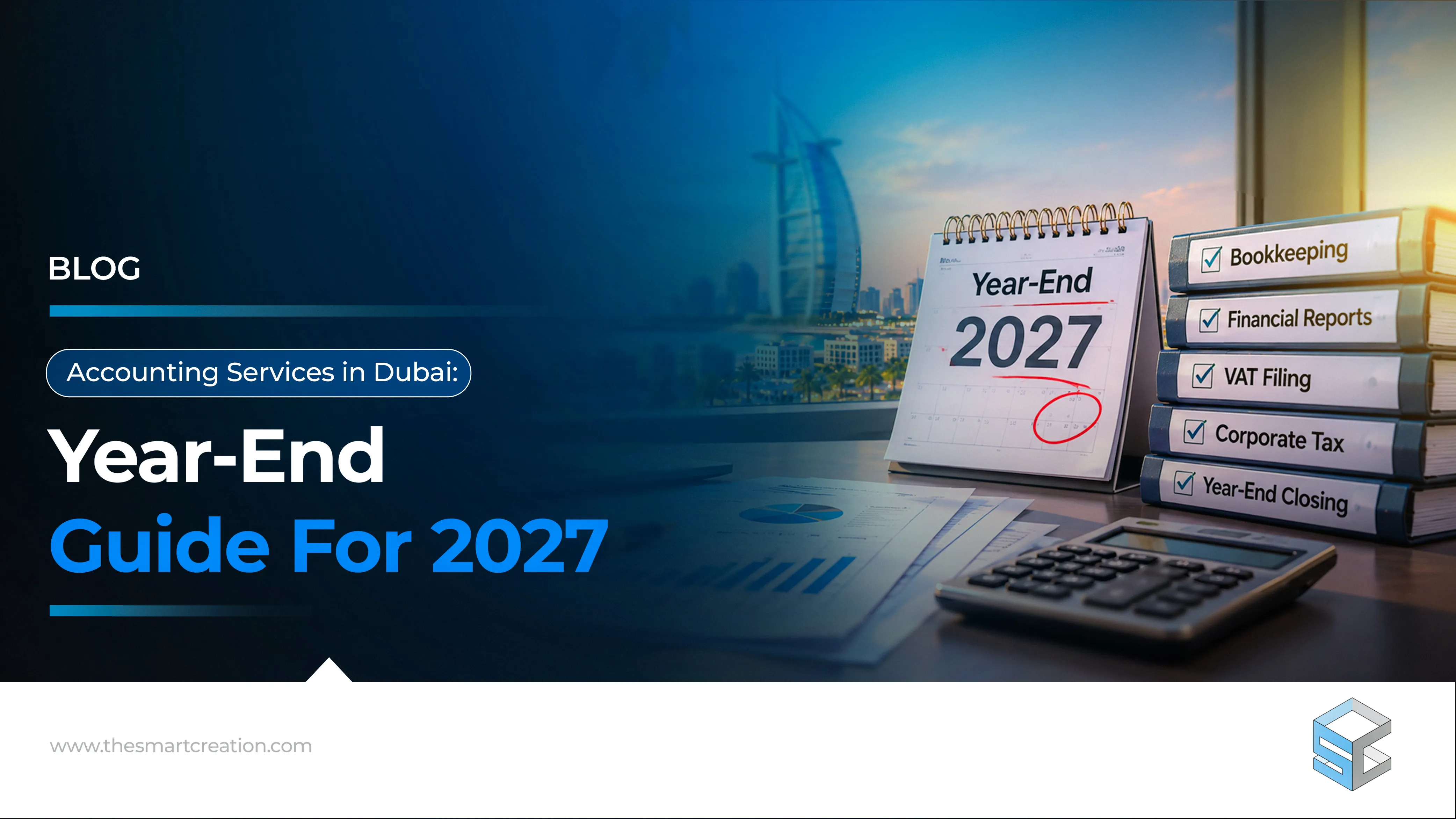
As 2026 comes to an end, businesses across Dubai are preparing their financial records, reviewing expenses, and planning for the upcoming year.
But is your company's accounting ready for 2027?
From managing daily transactions to preparing financial statements and meeting tax obligations, maintaining accurate accounts is essential for every business.
Professional Accounting Services in Dubai can help businesses organize their financial records, identify discrepancies, manage compliance requirements, and make informed financial decisions.
Whether you're running a startup, SME, or established company, this guide covers the essential year-end accounting tasks to complete before entering 2027.
Why Year-End Accounting Matters for UAE Businesses
Year-end accounting is more than simply calculating your company's profit or loss.
It helps business owners understand their financial position, identify outstanding liabilities, and prepare for the next financial period.
Proper accounting also supports compliance with applicable UAE Corporate Tax, VAT, and financial reporting requirements.
Key benefits of year-end accounting include:
-
Accurate financial records and reporting
-
Better cash flow management
-
Identification of unpaid invoices and expenses
-
Preparation for tax filing and audits
-
Improved budgeting and business planning
-
Reduced risk of accounting errors
For companies planning expansion or Business Setup in Dubai, organized financial records also support better financial planning and operational decisions.
1. Review and Reconcile Your Financial Records
The first step in preparing for 2027 is reviewing your company's accounting records.
Every financial transaction should be properly recorded and supported by relevant documentation.
Businesses should reconcile their bank statements with their accounting records to identify missing transactions, duplicate entries, or incorrect balances.
Your year-end accounting checklist should include:
-
Reconciling all business bank accounts
-
Reviewing sales and purchase transactions
-
Checking cash and petty cash balances
-
Verifying supplier payments
-
Recording outstanding business expenses
-
Reviewing employee-related payments
Professional Bookkeeping Services in Dubai can help businesses maintain accurate financial records throughout the year rather than correcting errors at the last minute.
2. Check Outstanding Invoices and Payments
Unpaid invoices can affect cash flow and financial reporting.
Before closing your accounts for 2026, review all outstanding customer invoices and supplier payments.
Identify overdue receivables, confirm payment statuses, and follow up with customers where necessary.
Businesses should also verify whether supplier invoices have been correctly recorded.
Important tasks include:
-
Reviewing outstanding customer invoices
-
Following up on overdue payments
-
Confirming supplier balances
-
Recording accrued expenses where applicable
-
Assessing potentially uncollectible debts
-
Reviewing advance payments and deposits
A clear understanding of receivables and payables helps businesses plan their finances more effectively for 2027.
3. Review UAE Corporate Tax Requirements
Corporate Tax is an important consideration for businesses operating in the UAE.
The UAE generally applies Corporate Tax at 0% on taxable income up to AED 375,000 and 9% on taxable income exceeding AED 375,000, subject to applicable rules and exceptions.
Businesses must maintain appropriate financial records and assess their registration, filing, and payment obligations.
For many taxable persons, Corporate Tax returns and payments are due within nine months after the end of the relevant tax period.
For example, a company with a financial year ending on 31 December 2026 would generally have a Corporate Tax filing and payment deadline of 30 September 2027.
Before year-end, businesses should:
-
Review Corporate Tax registration status
-
Check taxable income calculations
-
Identify deductible and non-deductible expenses
-
Review available tax reliefs and exemptions
-
Maintain supporting accounting documents
-
Prepare for applicable filing deadlines
Not every business has the same Corporate Tax treatment. Free zone status, business activities, relief eligibility, and other factors can affect the final tax position.
For official guidance, refer to the Federal Tax Authority.
4. Verify VAT Records and Filing Obligations
Businesses registered for VAT in the UAE must maintain accurate records of taxable sales, purchases, and related VAT transactions.
The standard UAE VAT rate is 5%, although zero-rated and exempt supplies are subject to different rules.
Year-end is a useful time to review whether VAT has been correctly recorded and whether supporting tax invoices are available.
Your VAT review should include:
-
Checking sales and purchase invoices
-
Reviewing output VAT and input VAT
-
Reconciling VAT accounts
-
Verifying supplier tax invoices
-
Reviewing previous VAT returns
-
Checking upcoming VAT filing deadlines
VAT return deadlines depend on the company's assigned tax periods and do not necessarily coincide with the financial year-end.
Professional accounting support can help businesses identify discrepancies and prepare accurate VAT records.
5. Prepare Financial Statements for 2026
Financial statements provide a clear picture of your company's financial performance and position.
They help business owners understand profitability, assets, liabilities, and cash flow.
Depending on the company's circumstances and applicable requirements, financial statements may also be needed for tax compliance, audits, banking, or other business purposes.
Important financial reports include:
-
Profit and Loss Statement
-
Balance Sheet
-
Cash Flow Statement
-
Supporting accounting schedules
Businesses should also review fixed assets, depreciation, inventory, and any necessary year-end adjustments.
Accurate financial statements help management evaluate business performance and make informed decisions for 2027.
6. Organize Documents and Prepare for Audits
Maintaining proper documentation is essential for financial transparency and compliance.
Businesses should organize accounting records and supporting documents so they can be accessed when required.
Important documents include:
-
Sales and purchase invoices
-
Bank statements
-
Payment receipts
-
Payroll records
-
Expense documentation
-
Contracts and agreements
-
VAT and Corporate Tax records
-
Previous financial statements
Under UAE Corporate Tax rules, relevant records generally must be retained for seven years following the end of the tax period to which they relate. VAT record retention requirements may differ depending on the records and applicable rules.
Companies should also confirm whether an audit is required under their licensing authority, legal structure, or other applicable regulations.
7. Plan Your Business Finances for 2027
Once your financial records are reviewed, the next step is preparing for the new year.
Year-end accounting provides valuable information for budgeting, expense management, and business growth.
Businesses should assess their financial performance and identify areas where costs can be controlled or resources allocated more effectively.
Consider the following for 2027:
-
Preparing an annual operating budget
-
Reviewing expected revenue and expenses
-
Forecasting cash flow
-
Planning tax payments
-
Evaluating staffing and operational costs
-
Setting financial targets
-
Reviewing accounting processes and software
Businesses planning to expand, hire employees, or open additional offices should include these expected costs in their financial plans.
Why Choose Professional Accounting Services in Dubai?
Managing accounting, bookkeeping, VAT, and Corporate Tax obligations can become increasingly complex as a business grows.
Working with experienced accounting professionals can help businesses maintain organized financial records and meet applicable compliance requirements.
Professional accounting services can support:
-
Daily bookkeeping and transaction recording
-
Bank reconciliation
-
Financial statement preparation
-
VAT registration and return filing
-
Corporate Tax registration and filing
-
Accounting record reviews
-
Financial reporting and compliance support
Outsourcing accounting functions can also allow business owners to focus more time on operations, customer relationships, and business development.
How Smart Creation Can Help Your Business Prepare for 2027
At Smart Creation, we understand that managing a business involves more than maintaining financial records.
From company formation to accounting and tax compliance, businesses need reliable support at different stages of their operations.
Our accounting and business support services include:
-
Accounting and bookkeeping services
-
VAT registration and return filing
-
Corporate Tax registration and filing
-
Financial statement preparation
-
Accounting and tax compliance assistance
-
Business Setup in Dubai
-
PRO and visa services
-
Office and business center solutions
Whether you have recently established your company or are managing an existing business, our team can assist with your accounting and related corporate requirements.
Explore our services at Smart Creation.
Start 2027 With Organized Business Finances
A successful financial year begins with accurate records, proper planning, and an understanding of your company's financial obligations.
Completing your year-end accounting tasks can help you identify financial issues, prepare for tax requirements, and make better business decisions.
Whether you need assistance with bookkeeping, financial statements, VAT, or Corporate Tax, professional Accounting Services in Dubai can make the process more manageable.
Smart Creation is here to support your business with accounting, taxation, company formation, and other corporate services.
Get in Touch With Smart Creation
Website: https://smartbusinesscreation.com/
Call / WhatsApp: +971 55 551 9459
Prepare your accounts today and enter 2027 with greater financial clarity.